Hardware Enforced Security
Introduction
This project provides an implementation of Islet HES that is reification of CCA Hardware Enforced Security (chapter “Hardware enforced security” of ARM CCA Security Model 1.0). It consists of two main parts:
- HES library - a platform-independent (
no_std) Rust library that implements HES functionalities. It is intended to be the basis of a solution that can be adapted to real hardware platforms in the future. - HES host application - a hardware HES simulator that runs on the host machine (not on dedicated hardware) and is designed to be used together with Islet RMM and the Islet CCA stack.
The project is written in Rust - a modern language that has built-in mechanisms preventing common memory bugs (memory leaks, buffer overflows, etc.). This greatly minimizes the occurrence of potential vulnerabilities.
The main goals of the Islet HES project are:
- Provide the HES library that is intended to be the basis of a solution that can be adapted to real hardware platforms in the future (running e.g. on an ARM Cortex-M processor).
- Provide the implementation of the HES application running on the host. The HES application is going to provide attestation and measured boot functionality.
- Making the HES implementation a platform for experimentation and development of additional functions (not currently defined in CCA specs).
Important
The current Islet HES works only as a host application and due to that as outlined in the section below it cannot satisfy all security requirements of a real hardware HES implementation. The short term goal is to have a working solution for the purpose of interoperability with Islet RMM. The long term goal is to have such implementation running on a real secure hardware/OS while reusing many software components (Islet HES library) of the current implementation.
HES technical background
CCA Hardware Enforced Security (HES) is a separate from the main Processing Element component that offers a crucial set of security features for an ARM CCA-enabled platform (note that PE (Processing Element) or AP (Application Processor) are used in this document interchangeably). These security features can be hosted on a dedicated, isolated, trusted subsystem or as a tenant within a multi-tenant trusted subsystem. The hosting platform and runtime together constitute what is known as a HES host. The HES host has its own verified boot process, provides secure non-volatile storage and cryptographic functionality.
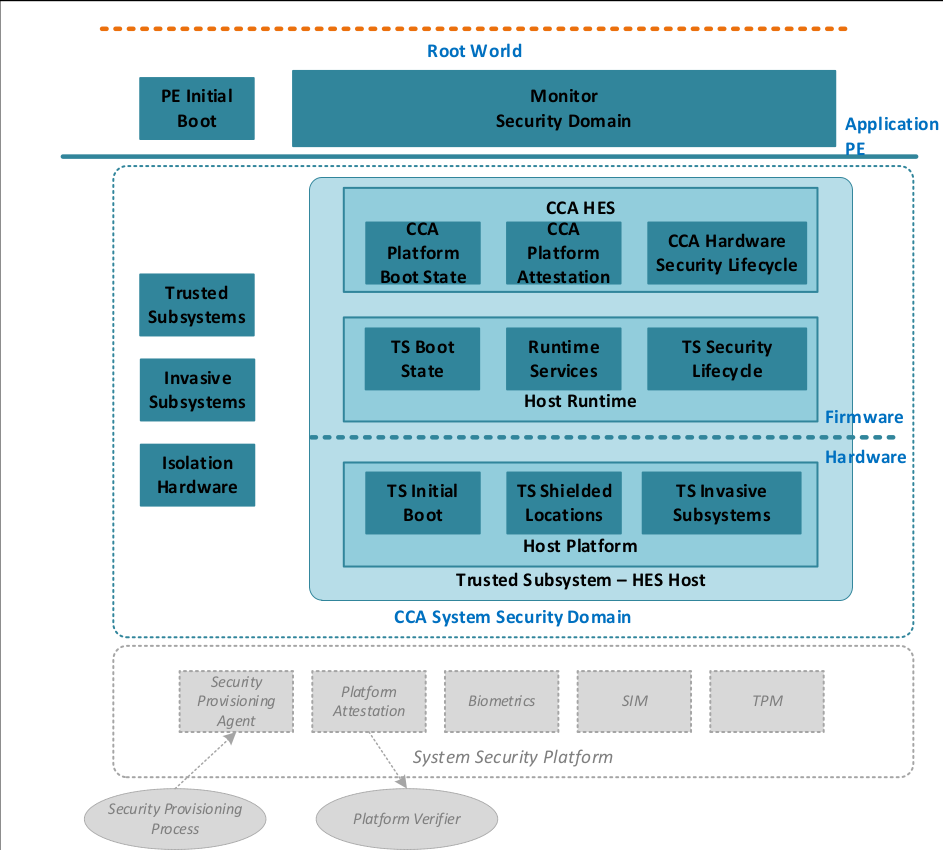
Figure 1: CCA Hardware Enforced Security according to ARM CCA Security Model 1.0
Physically HES host can be implemented by using a dedicated MCU (Microcontroller Unit) which shares no critical resources with the main PE. This greatly reduces the potential attack surface and ensures that the firmware running on the application PE cannot affect the internal state of the HES host, such as boot measurements or boot state. Physical isolation of critical resources, such as secrets, prevents from leaking sensitive information to PE.
According to ARM CCA Security Model 1.0 CCA HES provides the following services and interfaces to an application PE:
- CCA platform attestation service
- Interface to capture measurements and associated identity metadata for the Monitor, RMM firmware and boot code
- CCA HES can also provide an interface for capturing measurements from other trusted subsystems (like ARM’s System Control Processor responsible for power management)
The critical requirement from security point of view is that these interfaces should only be accessible to components belonging to CCA System Security (e.g. trusted subsystems) and Monitor Security Domains (Monitor, PE initial boot) (chapter 4 Hardware Enforced Security of ARM CCA Security Model).
CCA HES should also have access to internal HES services providing HES boot measurements and measurements sent by external systems (e.g. the bootloaders running on the main PE), cryptographic functionality, secrets and other metadata (e.g. identification of the platform).
HES host boots from its own non-volatile memory, such as ROM or FLASH, and loads HES firmware independently, without any PE intervention. HES provides only a fixed set of functionalities exposed to main PE. HES can run as a tenant within a multi-tenant trusted subsystem. But also in this case, HES should boot without intervention of REE side and start to serve its functionality before the main PE is started. The HES communication channel with the main PE must be accessible only to Monitor software and boot loaders.
ARM CCA Security Model requires that at minimum, HES should have an immutable initial boot-loader that servers as a Root of Trust. In the reference implementation of HES host called RSE, RSE takes the role of Root of Trust not only for the firmware running on RSE but also for other PEs on the platform. For example, RSE loads, and authenticates the BL1 image for the main PE. ARM CCA Security Model, allows the main PE to have its own initial immutable bootloader (BL1), although in this case the main PE (AP) should start its own booting process, only after successful booting of HES. Depending on the architecture, this can be achieved by keeping the main PE in reset until HES boots and starts serving its functionality. This approach serves two purposes:
- first, if the HES security is compromised (i.e., if one of the loaded HES images fails verification due to tampering), the entire platform will become useless
- second, the service for capturing measurements from the PE will be ready to serve.
Requirements
In this section we list the requirements for the Islet HES implementation. For the host application, obviously none of the CCA Security Model’s requirements related to the underlying hardware platform can be satisfied as the application serves only as a simulated HES, it’s running neither on a real hardware nor even an emulated one. Nevertheless, the HES implementation can provide interfaces that allow for future deployments on real hardware platforms.
REQ01: Islet HES should be implemented as a library implementing a subset of HES functionalities in a platform independent way (Rust no_std). This library can be used in the future to prepare an implementation running on a dedicated trusted subsystem, or as a tenant on a multi-tenant trusted subsystem (fulfilling the R005 of CCA SM).
REQ02: An accompanying application should be written that implements a simulated HES application running on the host that utilizes HES functionalities from the library. It should provide a communication channel that makes it possible to communicate with the PE and provide its services.
REQ03: Islet HES should provide following services to PE:
- delegated attestation service (R0043, R0090, R0129, R0091, R0092, R0093, R0025 of CCA SM)
- service for capturing measurements (R0010, R0011, R0012, R0013, R0051, R0052, R0130, R0073, R0080, R0083, R0084, R0085 of CCA SM)
The external interface for delegated attestation should implement following functionality:
- fetching the delegated attestation key
- fetching a CCA platform attestation token
The API should conform to the following declarations located in include/lib/psa/delegated_attestation.h of the TF-A source code.
psa_status_t
rse_delegated_attest_get_delegated_key(uint8_t   ecc_curve,
                                       uint32_t  key_bits,
                                       uint8_t  *key_buf,
                                       size_t    key_buf_size,
                                       size_t   *key_size,
                                       uint32_t  hash_algo);

psa_status_t
rse_delegated_attest_get_token(const uint8_t *dak_pub_hash,
                               size_t         dak_pub_hash_size,
                               uint8_t       *token_buf,
                               size_t         token_buf_size,
                               size_t        *token_size);
The format of CCA platform token must conform to the description included in the Chapter A7 Realm measurement and attestation of Realm Management Monitor specification.
Since preliminary implementation of measured boot and attestation in TF-A is intended to work together with the reference HES named RSE, the Islet HES should follow the implementations of TF-M/RSE and the additional delegated attestation functionality.
The external interface for measured boot should implement following functionality:
- extending boot measurements
The API should conform to the following function declaration defined in include/lib/psa/measured_boot.h in the TF-A source code.
psa_status_t
rse_measured_boot_extend_measurement(uint8_t index,
                                     const uint8_t *signer_id,
                                     size_t signer_id_size,
                                     const uint8_t *version,
                                     size_t version_size,
                                     uint32_t measurement_algo,
                                     const uint8_t *sw_type,
                                     size_t sw_type_size,
                                     const uint8_t *measurement_value,
                                     size_t measurement_value_size,
                                     bool lock_measurement);

psa_status_t rse_measured_boot_read_measurement(uint8_t index,
                                                uint8_t *signer_id,
                                                size_t signer_id_size,
                                                size_t *signer_id_len,
                                                uint8_t *version,
                                                size_t version_size,
                                                size_t *version_len,
                                                uint32_t *measurement_algo,
                                                uint8_t *sw_type,
                                                size_t sw_type_size,
                                                size_t *sw_type_len,
                                                uint8_t *measurement_value,
                                                size_t measurement_value_size,
                                                size_t *measurement_value_len,
                                                bool *is_locked);
The implementation of measured boot in Islet HES should follow the implementation of measured boot in RSE (TF-M).
The implementation of attestation and measured boot functionality require additional functionality such as:
- cryptographic functionality (hashing, signing, encryption, key derivation, TRNG, etc.)
- library for CBOR
- library for COSE
REQ04: The serialization/de-serialization and PSA protocol layer for the API exposed to PE (measured boot and attestation) should be as much as possible compatible with the existing mechanisms implemented in TF-A and TF-M (RSE). Have a look at:
- https://trustedfirmware-a.readthedocs.io/en/latest/design_documents/rse.html
- https://trustedfirmware-m.readthedocs.io/en/latest/platform/arm/rse/index.html
- https://github.com/islet-project/3rd-tf-a/blob/main/lib/psa/measured_boot.c
- https://github.com/islet-project/3rd-tf-a/blob/main/drivers/measured_boot/rse/rse_measured_boot.c
- https://github.com/islet-project/3rd-tf-a/blob/main/lib/psa/delegated_attestation.c
REQ05: The Islet HES should provide:
- measured boot for HES SW components that are not immutable (R0010, R0011, R0012, R0013, R0159, R0054, R0068, R0069, R0070 of CCA SM)
- a simulated interface for communication between the main PE and HES
Architecture
This chapter will describe the architecture of Islet HES. To put Islet HES in context, we start from the brief description of the whole system that as it’s being used in the attestation demo. Then, we describe the Islet HES itself, its building blocks, functionality and other details.
CCA Remote Attestation High Level Design for the demo
The information regarding running the demo is available in:
examples/veraison.
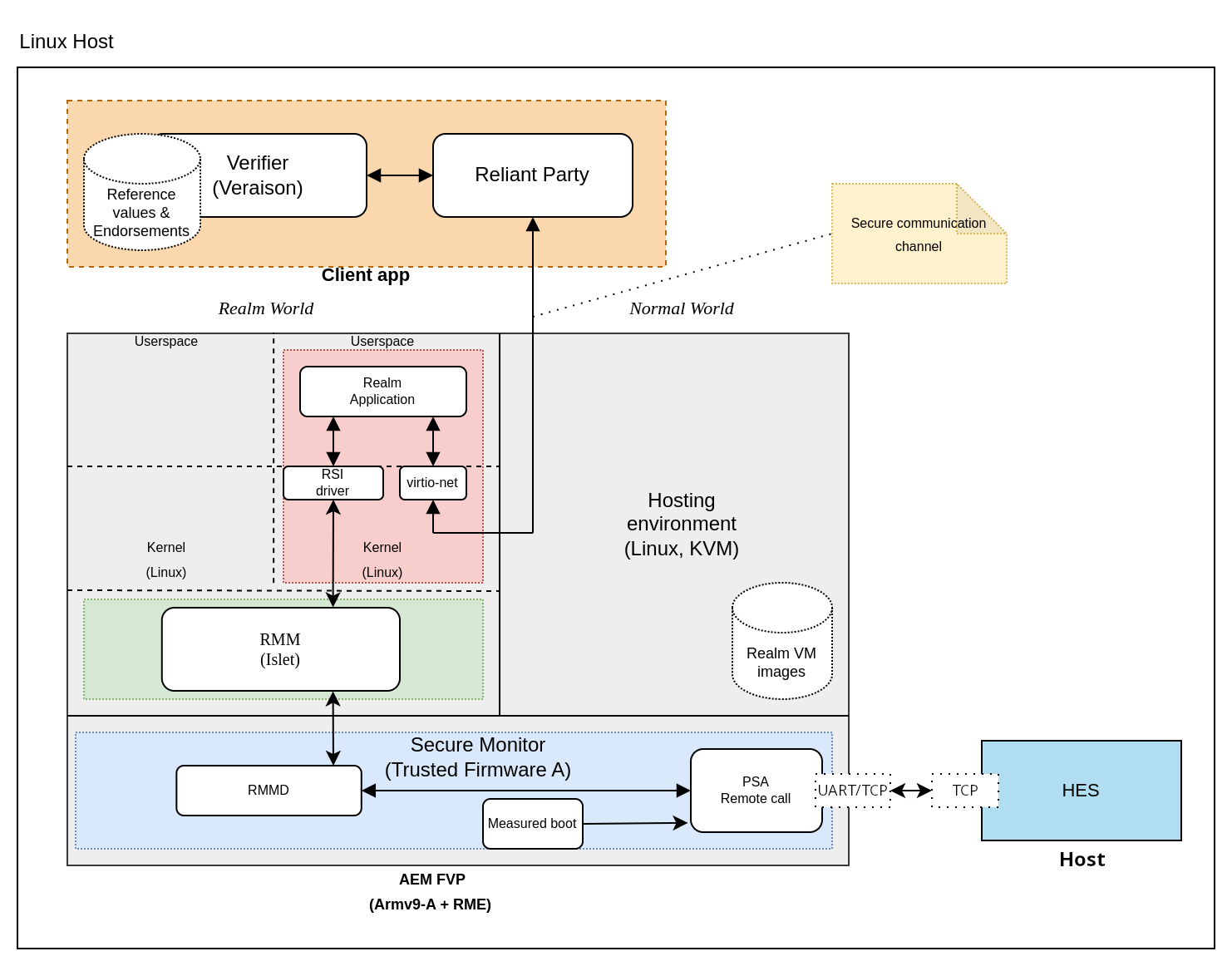
Figure 2: High level diagram showing the SW/FW stack used for development and demoing Arm CCA functionality
ARM CCA Security Model recommends to have HES in a CCA enabled platform. The platform should also support Realm Management Extension (RME) to be fully compatible with the ARM CCA requirements. During the research phase, there was no platform (HW or emulated) that is equipped with both HES and a main PE that supports RME. This led to the design of a simple simulated HES that would provided necessary interfaces to the PE. Another question that we had to deal with was how to implement the communication channel between these two entities.
From this we decided that:
- The main PE that supports RME will be emulated either on AEM FVP or a RME enabled QEMU.
- The Islet HES will run directly on the host.
- The UART device from PE/TF-A side will be used to create a communication channel with HES. This UART is then mapped as a TCP connection by either FVP or QEMU. HES host application uses TCP directly.
The above diagram represents the system for the attestation demo. The ARM FVP/QEMU hosts all software components that supports ARM CCA. The main clients of HES are boot loaders of TF-A and RMMD. During the boot process of the main PE, the boot loaders send the measurements to the HES via PSA remote call API. Originally, TF-A uses a mailbox interface for transferring messages between PE and RSE. For our purposes, we replaced the MHU (Message Handling Unit) driver with UART, at the same time keeping the binary compatibility of the messages.
Another functionality that HES is going to provide is the delegated attestation. During the initialization of RMM, RMM requests the Delegated Attestation Key from the HES that is used to sign the Realm attestation token. The key is retrieved only once an cached by RMM. The CCA platform attestation token is requested from HES only once during the platform startup and then cached. Upon the Reliant Party request (it is a remote party client) RMM prepares a realm attestation token. This token altogether with the CCA platform attestation token is concatenated and sent back to the requester. The Reliant Party then relays the attestation token to the Verifier which checks its signature and verifies measurements against the reference values stored in the Verifier’s database. The results of verification are sent back to the Reliant Party that according to some policy may decide if it can trust the Realm and the whole platform.
Islet HES architecture
The user space HES application is built-up from the following components:
- Attestation - the main responsibility of this component is preparation of the CCA platform attestation token. The interfaces exposed to external PEs include fetching the attestation token and fetching the delegated attestation key. This component utilizes information gathered by the measured boot component and functions provided by auxiliary modules like CBOR and COSE (creating the binary representation of the CCA platform attestation token, creating a digital signature) and Key derivation.The source code is available in
- Measured boot - the main function of this component is gathering measurements from the external PEs. During initialization of the HES application, this component also fetches local measurements from the platform HES host measured boot component. The attestation component makes use of measurements gathered by this component to build the CCA platform attestation token. The measured boot component uses also the hash functions provided by the Crypto component. The source code is available in the following files:
- Hardware abstraction layer - this component is an interface for a simulated hardware that makes it immediately clear what data should be obtained from the underlying secure hardware itself. The current implementation stubs, hardcodes or reads the values from files, but in case of a real hardware implementation all those values/functionalities should be obtained/implemented in the secure hardware itself (as per CCA HES Security Model). The source code is available in:
- Communication - the main functionality of this component is handling the communication protocol and serialization/de-serialization of messages exchanged between the main PE and the HES. This includes de-serialization of received binary messages, routing particular calls to attestation and measured boot components, serialization of responses that are to be sent back to the main PE/TF-A via the UART device. The source code is available in the following files:
- CPAK generator - a standalone tool for deriving the CCA Platform Attestation Key (CPAK) public key from the provisioned GUK (and optionally the BL2 boot loader image hash). It follows the same key derivation scheme as the HES library’s Key derivation component. The derived CPAK public key is used during the preparation of endorsements and reference values that are provisioned to the Veraison verification service, so that the Verifier can verify the signature of CCA platform attestation tokens. The source code is available in:
- Auxiliary components: CBOR, COSE, Key derivation, Crypto - the attestation and measured boot component rely on these components. The Key derivation component interacts with the Crypto component and reads seed data from the OTP (HUK, GUK keys), Lifecycle manager, and Measured boot components.
Apart from the implemented functionalities, some external components and interfaces for platform specific are utilized.
The required external components are:
- ciborium - Rust crate library compatible with CBOR format for platform token creation,
- coset - Rust crate library compatible with COSE_sign1 for platform token signing and creation, which utilizes the ciborium crate for CBOR parsing and allows usage of custom crypto API for token signing,
- RustCrypto - set of crates implementing the required cryptographic functionalities (key derivation, signatures etc.),
Supported (hardware provisioned on a real hardware) keys are:
- HUK - as a 256 bit symmetric key,
- GUK - as a 256 bit symmetric key,
- CPAK - (optional, can be derived manually) as an ECC_FAMILY_SECP_R1 asymmetric key,
Component dependencies
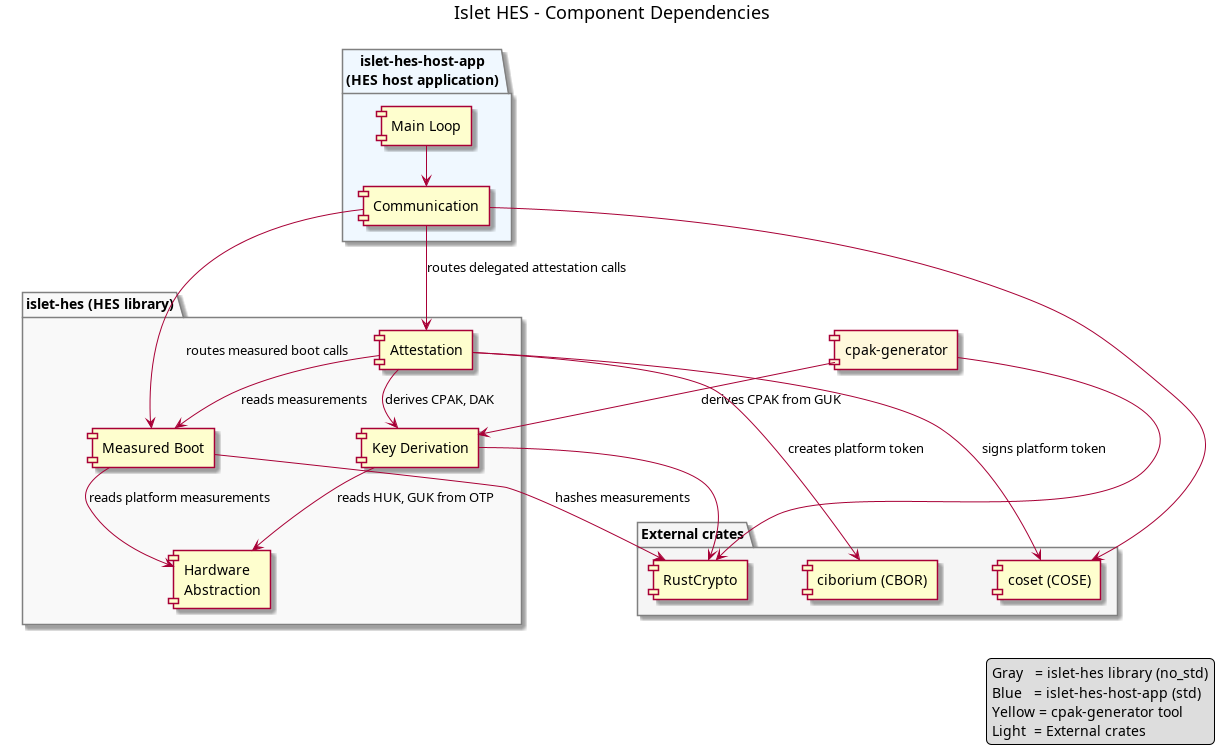
Figure 3: HES component dependency diagram
Directory structure
This section describes the content of https://github.com/islet-project/islet/tree/main/hes directory.
cpak-generator: A tool for deriving the CPAK public key from GUK (and optionally the BL2 hash). It is used during the preparation of endorsements and reference values for the Veraison verification service.islet-hes: The HES library crate implementing the core HES functionalities (attestation, measured boot, hardware abstraction layer) in a platform-independent way.islet-hes/src/attestation: Delegated attestation component - preparation of CCA platform attestation tokens and fetching of the delegated attestation key.islet-hes/src/hw: Hardware abstraction layer - interface for simulated hardware data. The current implementation stubs, hardcodes or reads the values from files.islet-hes/src/measured_boot: Measured boot component - gathering and managing boot measurements from external PEs and from the HES host itself.
islet-hes-host-app: The HES host application that simulates a hardware HES on the host machine. It includes the communication component (PSA message serialization and the UART/TCP channel) and the main application loop.key-derivation: Key derivation library - implements the key derivation schemes (CPAK, DAK derivation from GUK) following the same scheme as TF-M’s RSE.
Initialization
During the initialization of the Islet HES the following actions are performed:
- derivation of 256bit CPAK_seed from GUK (and optionally BL2 hash) using counter-mode KDF,
- derivation of asymmetric CPAK from CPAK_seed
- derivation of 256bit DAK seed from GUK
- initialization of dummy measurements for hardware/platform components
- initialization of the communication component
After the initialization of all HES components, the application goes into the idle mode and waits in the loop for the incoming requests from the communication channel.
Cryptographic Keys
Minimum CCA hardware provisioned keys are (CCA Security Model 1.0 Ch 5.1):
| Parameter | Description | Secret |
|---|---|---|
| HUK | Hardware unique symmetric key. It represents a randomly unique seed for each manufactured instance of a CCA enabled system. | Yes |
| GUK | Group unique symmetric key. It represents a randomly unique seed that may be shared with some group of manufactured CCA enabled systems with the same immutable hardware security properties. | Yes |
HUK is randomly generated at manufacture and can only be accessed by CCA HES at any point in the security lifecycle of the system.
GUK is at least randomly unique for some group of manufactured instances of a CCA enabled system and can only be accessed by CCA HES, other than temporarily at security provisioning (it can be stored temporarily outside of system for the purpose of manufacture provisioning, but must not be collected or stored persistently outside of the system).
The most important derived parameters of CCA (CCA Security Model 1.0 Ch 5.2):
| Parameter | Description | Private | Ownership | Source |
|---|---|---|---|---|
| Derivation root keys for Monitor security domain | Virtual HUK/GUK, derived uniquely for Monitor security domain at boot. | Yes | Monitor security domain | PE initial boot, or CCA HES |
| Derivation root keys for Realm Management security domain | Vritual HUK/GUK, derived uniquely for Realm Management security domain at boot. | Yes | Realm Management security domain | Monitor security domain |
| CCA platform attestation key (CPAK) | Asymmetric attestation key for the CCA platform. Identifies the immutable security properties of the CCA system security domain | Yes, private portion | CCA HES | Typcally derived from GUK, or equivalent. |
| CPAK ID | Pubic identifier of CPAK | No | CCA HES | Hash of public part of CPAK.Uniquely identifies the immutable hardware security properties of a CCA platform. |
The following tables outline general recommendations for parameters sizes and algorithms in CCA implementation (CCA Security Model 1.0 Ch 12.3.):
| Parameter type | Sizes | Information |
|---|---|---|
| Public identifier | 512 bits | Typically a hash of a public key or a certificate.Arm does not recommend using truncated hashes for public identifiers. |
| Counter values used as unique identifiers | 64 bits | |
| Seeds used for symmetric key derivations | 256 bits | |
| Symmetric keys | 256 bits | AES-256 |
| Asymmetric keys | RSA: 3072 bits, ECC: 384 bits | RSA 3072, ECC Curve-P384 |
| Operation | Algorithm | Information |
|---|---|---|
| General encryption | AES-256 | |
| Hash function | SHA-512 | NIST SP 800-107 |
| Signing - RSA operation | RSA-PKCS#1 v2.2, RFC 8017, FIPS PUB 186-4 | RSASSA-PSS 3072, EMS-PSS, SHA-512 |
| Signing - ECC option | ECDSA, RFC 6979, FIPS PUB 186-4 | Curve P-384, SHA-512 |
| Signing - Symmetric | HMAC-SHA512, RFC 2014, NIST SP 800-107 | 512 bits, Arm does not recommend truncating HMAC. |
| Key derivations | NIST SP 800-108, Counter mode, HMAC-SHA512, RFC 2014, NIST SP 800-107 |
The Islet HES application utilizes the same scheme of key derivation as implemented in TF-M’s RSE. The RSE-based implementation derives the seeds and keys based on the following graph:
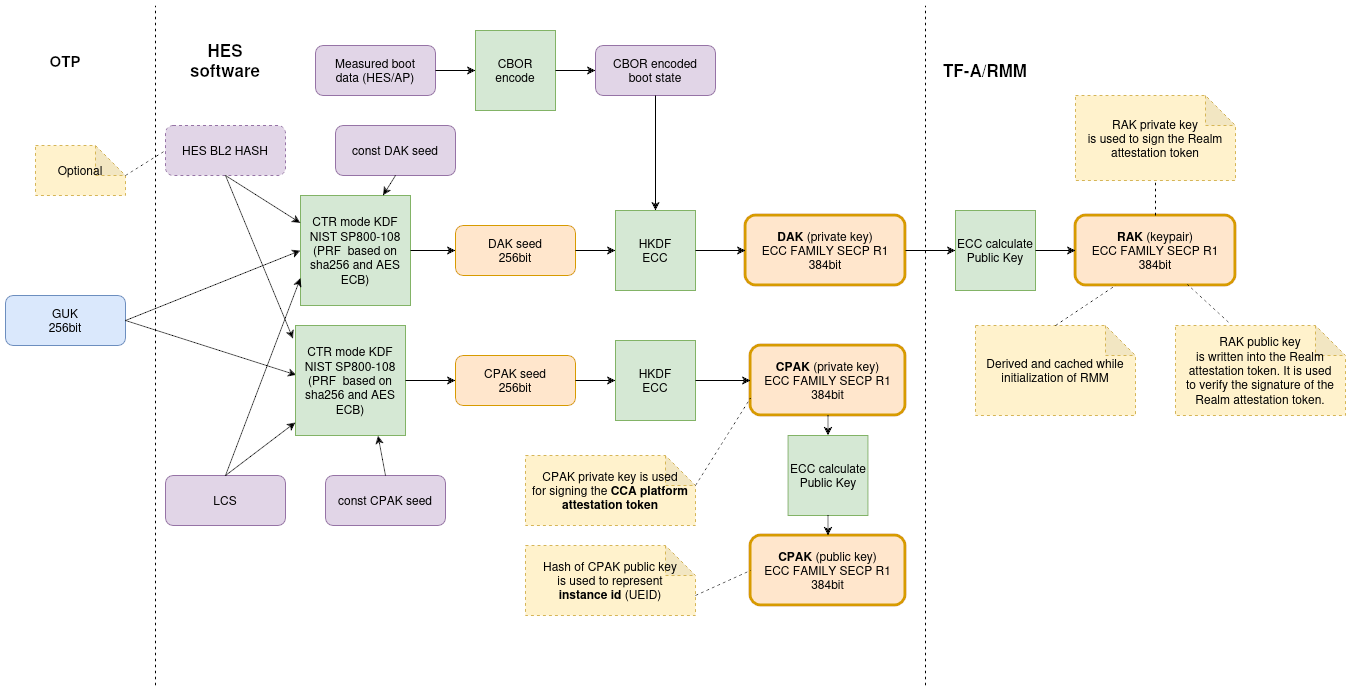
Figure 4: The key derivation process
Measured boot and attestation
Measured Boot component provides interfaces to extend and read measurements (hash values and metadata) during various stages of a power cycle. The measurements are extended by the boot loaders running on AP (via the external interface - UART in our case). They are read by the delegated attestation component and used to generate the CCA platform attestation token. All of these measurements are fetched by Measured Boot component during its initialization.
Each software component claim comprises of the following measurements which are extended and read by Measured Boot component.
- Measurement type: It represents the role of the software component.
- Measurement value: It represents a hash of the invariant software component in memory at start-up time. The value must be a cryptographic hash of 256 bits or stronger.
- Version: It represents the issued software version.
- Signer ID: It represents the hash of a signing authority public key.
- Measurement description: It represents the way in which the measurement value of the software component is computed.
These measurements are used as software component claims of the platform token.
The ARM CCA based implementation utilizes a model where the responsibility of creating the overall attestation token is split between different parties (HES and RMM). The overall token is a composition of sub-tokens, where each sub-token is produced by an individual entity within the system. Each sub-token is signed with a different key, which is owned by the sub-token producer. The signing keys are derived in a chain. Each key is derived by the producer of the previous (in the chain) attestation token. The sub-tokens must be cryptographically bound to each other, to make the key chain back traceable to the CPAK, which is used to sign the platform attestation token. The cryptographic binding is achieved by including the hash of the public key in the challenge claim of the predecessor attestation token.
The following diagram shows the simplified flow of delegated key derivation and the CCA platform token creation:
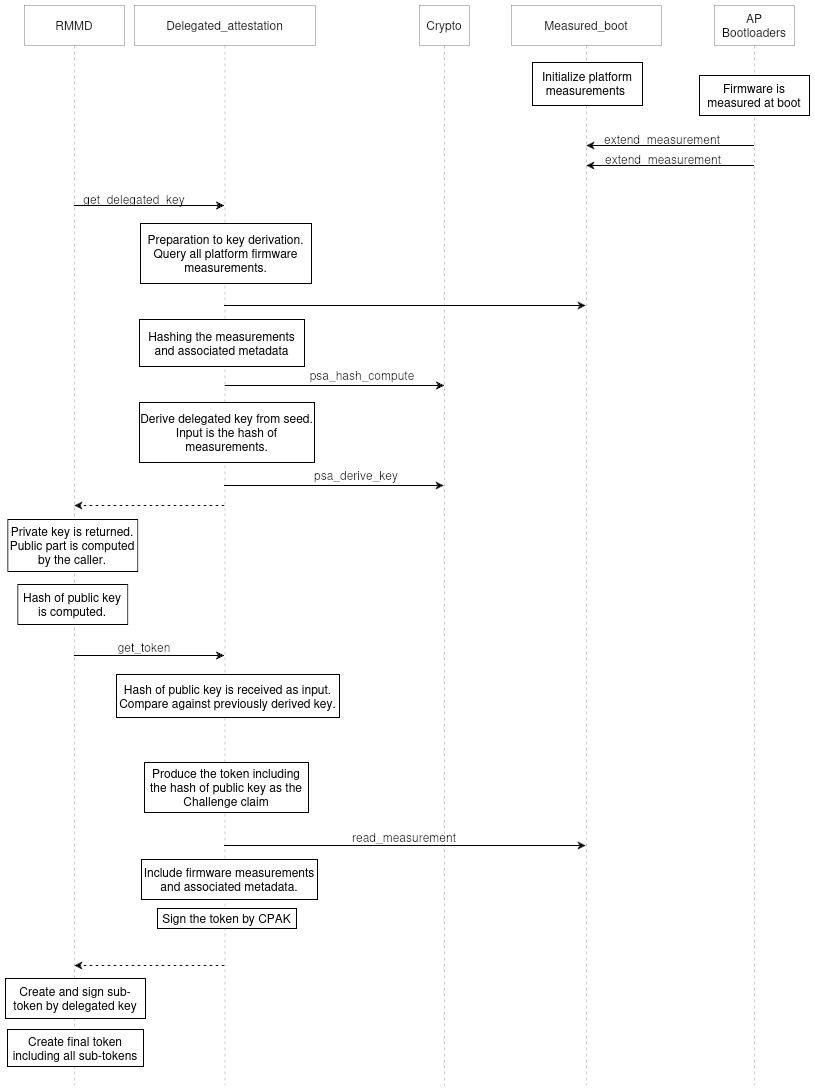
Figure 5: The sequence diagram of the delegated attestation process
A CCA attestation token according to RMM specification A7.2.1 is a collection of claims about the state of a Realm and of the CCA platform on which the Realm is running. A CCA attestation token consists of two parts:
- Realm token: contains attributes of the Realm, including:
- Realm Initial Measurement
- Realm Extensible Measurements
- CCA platform token: contains attributes of the CCA platform on which the Realm is running, including:
- CCA platform identity
- CCA platform lifecycle state
- CCA platform software component measurements
The CCA platform token contains structured data in CBOR, wrapped with a COSE_Sign1 envelope according to COSE standard signed by the CPAK.
The CCA attestation token is defined as follows (using Concise Data Definition Language):
cca-token = #6.399(cca-token-collection) ; CMW Collection
                                         ; (draft-ietf-rats-msg-wrap)
cca-platform-token = bstr .cbor COSE_Sign1_Tagged
cca-realm-delegated-token = bstr .cbor COSE_Sign1_Tagged
cca-token-collection = {
    44234 => cca-platform-token          ; 44234 = 0xACCA
    44241 => cca-realm-delegated-token
}

; EAT standard definitions
COSE_Sign1_Tagged = #6.18(COSE_Sign1)

; Deliberately shortcut these definitions until EAT is finalised and able to
; pull in the full set of definitions
COSE_Sign1 = "COSE-Sign1 placeholder"
The composition of the CCA attestation token is summarized in the following figure:
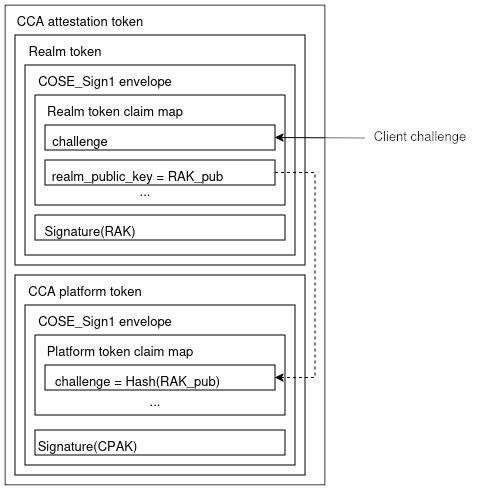
Figure 6: The structure of the Arm CCA attestation token
The details of claims carried by the CCA platform token are described in RMM specification A7.2.3.2. Here is an excerpt.
The CCA platform token claim map is defined as follows (represented in CDDL):
cca-platform-claims = (cca-platform-claim-map)

cca-platform-claim-map = {
    cca-platform-profile
	cca-platform-challenge
	cca-platform-implementation-id
	cca-platform-instance-id
	cca-platform-config
	cca-platform-lifecycle
	cca-platform-sw-components
	? cca-platform-verification-service
	cca-platform-hash-algo-id
}

cca-platform-profile-label = 265 ; EAT profile
cca-platform-profile-type = "tag:arm.com,2023:cca_platform#1.0.0"
cca-platform-profile = (
	cca-platform-profile-label => cca-platform-profile-type
)

cca-hash-type = bytes .size 32 / bytes .size 48 / bytes .size 64
cca-platform-challenge-label = 10
cca-platform-challenge = (
	cca-platform-challenge-label => cca-hash-type
)

cca-platform-implementation-id-label = 2396 ; PSA implementation ID
cca-platform-implementation-id-type = bytes .size 32
cca-platform-implementation-id = (
	cca-platform-implementation-id-label => cca-platform-implementation-id-type
)

cca-platform-instance-id-label = 256 ; EAT ueid
; TODO: require that the first byte of cca-platform-instance-id-type is 0x01
; EAT UEIDs need to be 7 - 33 bytes
cca-platform-instance-id-type = bytes .size 33
cca-platform-instance-id = (
	cca-platform-instance-id-label => cca-platform-instance-id-type
)

cca-platform-config-label = 2401 ; PSA platform range
                                 ; TBD: add to IANA registration
cca-platform-config-type = bytes
cca-platform-config = (
	cca-platform-config-label => cca-platform-config-type
)

cca-platform-lifecycle-label = 2395 ; PSA lifecycle
cca-platform-lifecycle-unknown-type = 0x0000..0x00ff
cca-platform-lifecycle-assembly-and-test-type = 0x1000..0x10ff
cca-platform-lifecycle-cca-platform-rot-provisioning-type = 0x2000..0x20ff
cca-platform-lifecycle-secured-type = 0x3000..0x30ff
cca-platform-lifecycle-non-cca-platform-rot-debug-type = 0x4000..0x40ff
cca-platform-lifecycle-recoverable-cca-platform-rot-debug-type = 0x5000..0x50ff
cca-platform-lifecycle-decommissioned-type = 0x6000..0x60ff
cca-platform-lifecycle-type =
	cca-platform-lifecycle-unknown-type /
	cca-platform-lifecycle-assembly-and-test-type /
	cca-platform-lifecycle-cca-platform-rot-provisioning-type /
	cca-platform-lifecycle-secured-type /
	cca-platform-lifecycle-non-cca-platform-rot-debug-type /
	cca-platform-lifecycle-recoverable-cca-platform-rot-debug-type /
	cca-platform-lifecycle-decommissioned-type
cca-platform-lifecycle = (
	cca-platform-lifecycle-label => cca-platform-lifecycle-type
)

cca-platform-sw-components-label = 2399 ; PSA software components
cca-platform-sw-component = {
  ? 1 => text,          ; component type
    2 => cca-hash-type, ; measurement value
  ? 4 => text,          ; version
    5 => cca-hash-type, ; signer id
  ? 6 => text,          ; hash algorithm identifier
}
cca-platform-sw-components = (
	cca-platform-sw-components-label => [ + cca-platform-sw-component ]
)

cca-platform-verification-service-label = 2400 ; PSA verification service
cca-platform-verification-service-type = text
cca-platform-verification-service = (
	cca-platform-verification-service-label =>
		cca-platform-verification-service-type
)

cca-platform-hash-algo-id-label = 2402 ; PSA platform range
                                       ; TBD: add to IANA registration
cca-platform-hash-algo-id = (
	cca-platform-hash-algo-id-label => text
)
The CCA platform profile claim identifies the EAT profile to which the CCA platform token conforms. Note that because the platform token is expected to be issued when bound to a Realm token, the profile document should include a description of the Realm claims. It s identified using the EAT profile label (265).
The CCA platform challenge claim contains a hash of the public key used to sign the Realm token. It is identified using the EAT nonce label (10).
The CCA platform Implementation ID claim uniquely identifies the implementation of the CCA platform. The value of the CCA platform Implementation ID claim can be used by a verification service to locate the details of the CCA platform implementation from an endorser or manufacturer. Such details are used by a verification service to determine the security properties or certification status of the CCA platform implementation. The semantics of the CCA platform Implementation ID value are defined by the manufacturer or a particular certification scheme. For example, the ID could take the form of a product serial number, database ID, or other appropriate identifier.
The CCA platform Instance ID claim represents the unique identifier of the CPAK for the CCA platform. The CCA platform Instance ID claim is identified using the EAT UEID label (256). The first byte of its value must be 0x01 (https://datatracker.ietf.org/doc/draft-ietf-rats-eat/ ). RSE implementation defines it as instance_id= 0x01 || hash(CPAK_pub.
The CCA platform config claim describes the set of chosen implementation options of the CCA platform. As an example, these may include a description of the level of physical memory protection which is provided. The CCA platform config claim is expected to contain the System Properties field which is present in the Root Non-volatile Storage (RNVS) public parameters.
The CCA platform lifecycle claim identifies the lifecycle state of the CCA platform. The value of the CCA platform lifecycle claim is an integer which is divided as follows:
- value[15:8]: CCA platform lifecycle state
- value[7:0]: IMPLEMENTATION DEFINED
The CCA platform software components claim is a list of software components which can affect the behavior of the CCA platform. It is expected that an implementation will describe the expected software component values within the profile. The CCA platform software component type is a string which represents the role of the software component. It s intended for use as a hint to help the relying party understand how to evaluate the CCA platform software component measurement value. The CCA platform software component measurement value represents a hash of the state of the software component in memory at the time it was initialized. The CCA platform software component version is a text string whose meaning is defined by the software component vendor. The CCA platform software component signer ID is the hash of a signing authority public key for the software component. It can be used by a verifier to ensure that the software component was signed by an expected trusted source. The CCA platform software hash algorithm ID identifies the way in which the hash algorithm used to measure the CCA platform software component. The CCA platform verification service claim is a hint which can be used by a relying party to locate a verifier for the token. Its value is a text string which can be used to locate the service or a URL specifying the address of the service. The CCA platform hash algorithm ID claim identifies the algorithm used to calculate the extended measurements in the CCA platform token.
All of these values are stubbed for the demo purpose. On a real HW platform most of these values should be provided by the underlying platform. For example, a CCA platform implementation ID may represent a unique identifier of the implementation of immutable RoT, this value can be stored in ROM altogether with the immutable boot loader image.
Security provisioning
The process of provisioning secrets and other data (e.g. identity) is platform specific. Provisioned data may take the form of a signed and encrypted bundle transferred to a platform via some dedicated interface, or injected directly to RAM via JTAG interface (TF-M RSE case). Apart from platform specific keys (used for verified boot etc.), the CCA requires to have provisioned two dedicated keys: GUK and HUK (see Cryptographic keys).
In case of Islet HES, these secrets are hard coded in the files read by the source code or in the source code itself. Nevertheless, the derived CPAK public key and the platform identity metadata should be delivered to the Verifier to be able to verify the signature of the CCA platform attestation token.
Here is a minimum list of provisioned secrets that are needed by the HES application (doesn’t include secrets that are required by the underlying platform):
- HUK (for more information refer to the Cryptographic Keys chapter) - currently not used in key derivation, but it can be used in future use cases (e.g. derivation of sealing keys)
- GUK (for more information refer to the Cryptographic Keys chapter)
CPAK_pub derivation
During the security provisioning phase, a vendor/manufacturer should provision GUK and HUK keys to the HES. The GUK key is used in the CPAK derivation process. The private part of CPAK is used to sign the CCA platform attestation token. To verify the authenticity of the token, a verifier should have access to the public part of CPAK.
In our case, the CPAK_pub is derived from GUK (and optionally the image of the
2nd level boot loader if present) using a dedicated tool. This tool is following
the same derivation scheme as described in the Cryptographic Keys chapter. It’s
available in
hes/cpak-generator/src/main.rs.
The cpak_generator tool is being used during the preparation of endorsements
and reference values. The derived CPAK_pub keys are used to verify the
signature of generated CCA platform tokens.
Endorsements and reference values provisioning
In this section we describe the process and the tools used for preparation of endorsements and reference values (https://datatracker.ietf.org/doc/rfc9334/) that have to be provisioned to a verification service. In our case the Veraison project is acting as a verification service. The Veraison project is officially referred by ARM in their documentation and is a part of IETF/RATS project. The intention of Veraison’s developers is not only to support ARM CCA but also other attestation technologies.
The described process of provisioning and the tools developed for the Islet HES are being used in the attestation demo. For more information about the demo, Veraison and processes detailed further in this section please refer to the following links:
- https://github.com/islet-project/islet/tree/main/examples/veraison
- https://github.com/islet-project/islet/blob/main/examples/veraison/RUN.md
- https://github.com/islet-project/islet/blob/main/examples/veraison/provisioning/run.sh
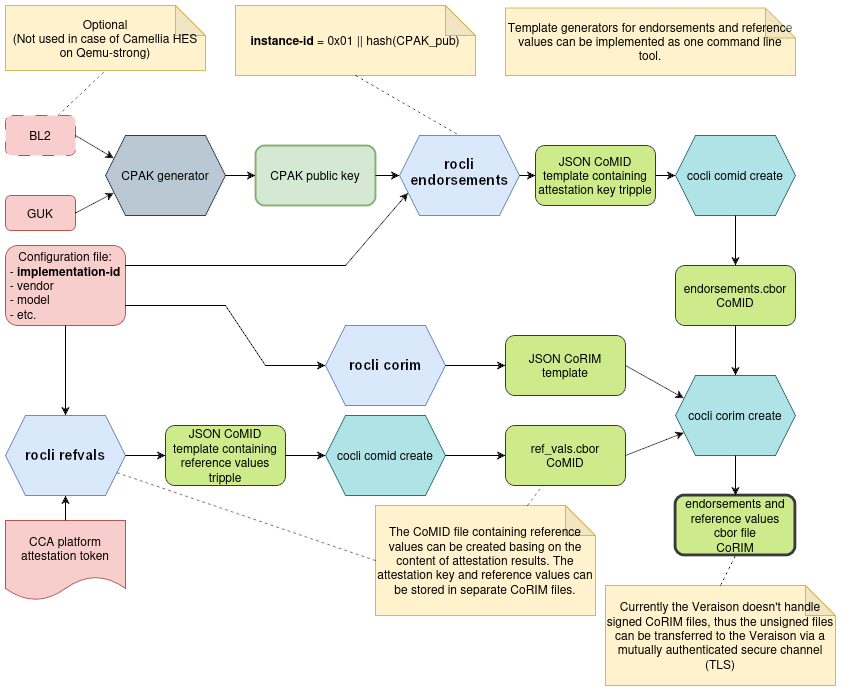
Figure 7: The process of generating endorsements and reference values intended to be provisioned to the Veraison verification service
The above diagram show the process of creating CoRIM (Concise Reference Integrity Manifest) documents containing the endorsements and reference values. CoRIM documents can bundle multiple CoMID (Concise Module Identifiers) and CoSWID (Concise Software Identification Tags) documents. CoMID format describes the hardware and firmware modules, whereas CoSWID format describes the software components. The CoMID, CoRIM and CoSWID files utilize the CBOR encoding. In case of ARM CCA scheme implemented in Veraison, only CoMID documents are used to carry reference-triples and attest-key-triples (For more info please refer to https://github.com/veraison/docs/tree/main/demo/cca and https://github.com/veraison/services/tree/main/scheme/arm-cca).
The rocli tool mentioned on the diagram is a custom developed helper that is
available
in the rocli repository.
The generated CoRIM documents are intended to be provisioned to the Veraison provisioning service by using the cocli submit command. See more here:
- https://github.com/veraison/docs/blob/main/api/endorsement-provisioning/README.md
- https://github.com/veraison/docs/blob/main/demo/cca/manual-end-to-end.md
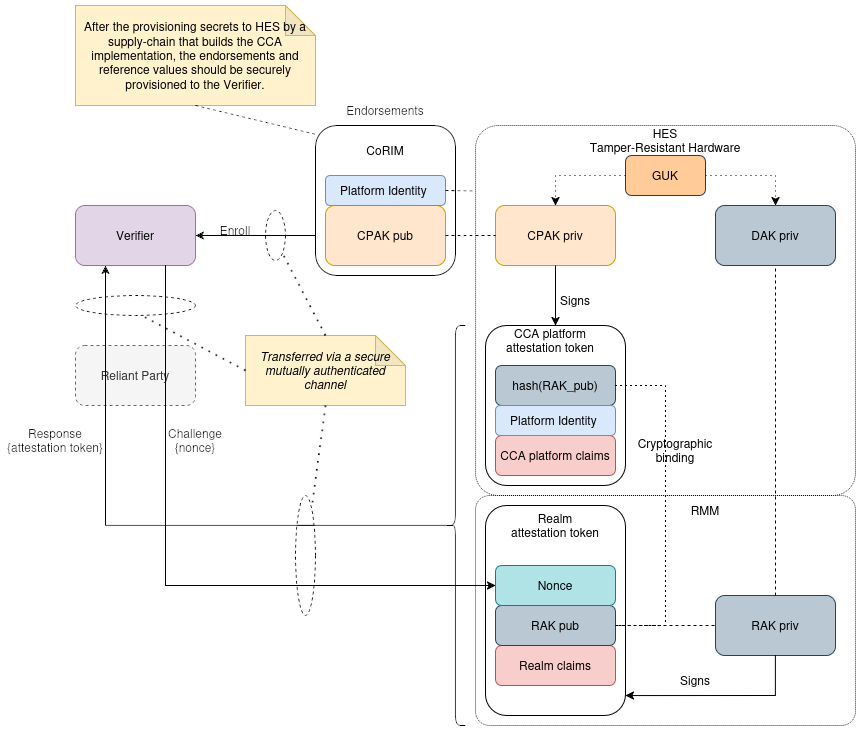
Figure 8: Details regarding relation between the keys used to sign and verify the CCA Platform and Realm tokens
The above diagram helps to better understand what keys are used and how they are related to each other in the context of the CCA remote attestation.
The HES is in the possession of the GUK that is kept in secret. GUK is used in derivations of CPAK and DAK. The CPAK priv, which is also held securely in HES, is used to sign the CCA platform attestation token.
The public part of CPAK altogether with the identification data (instance-id, implementation-id) should be securely provisioned to the Verifier via mutually authenticated secure channel during the manufacturing process at the manufacturer’s premises.
The ARM CCA enabled system generates an attestation token being a concatenation of the CCA platform attestation token and the Realm attestation token. The Realm attestation token is signed using the private part of RAK, the public part of RAK is included in the Realm attestation token.
To protect from reply attacks, the nonce sent by the Verifier is included into the Realm attestation token. To cryptographically bind the Realm attestation token to the CCA platform attestation token, the hash of public part of RAK is included in the CCA platform attestation token.
The Verifier can check the authenticity of the CCA platform attestation token by using previously provisioned CPAK pub. The authenticity of the Realm attestation token can be checked by verifying the signature against the RAK pub.
Communication channel
On the real hardware the communication channel between main PE and HES is utilizing a hardware mailbox channel like MHU.
In our case the PE running on FVP/QEMU utilizes a simple custom developed UART
channel
that is placed instead of the MHU in the TF-A. The measured boot and delegated
attestation have been restored for the FVP and QEMU platforms to utilize the
aforementioned channel. The modified TF-A sources are available on the hes
branch of tf-a repository.
The UART is mapped onto TCP device on the host by FVP or QEMU in their respective configuration options. Islet HES host application uses TCP to establish connection with the FVP or QEMU and use this channel to exchange messages.
Important
The current UART/TCP channel implementation between PE and HES is NOT secure and is only used for the purpose of development and simulating the HES without a real hardware. In case of implementing HES on an actual hardware a secure hardware level channel needs to be used (as per CCA HES Security Model). E.g. like the aforementioned MHU mailbox on ARM platforms. The target hardware/OS used is out of scope of this document.
The communication mechanism does follow the RSE protocol and serialization (as described in REQ04). This way the HES communication is compatible with the ARM’s TF-A/TF-M RSE. This approach reduces the amount of changes in the TF-A source code while adding the support for UART device. It also enable easier porting of the Islet HES to ARM platforms that currently utilize RSE in the role of HES.
The analysis of the TF-A and TF-M RSE source code tells us that the HES works passively. HES waits for a message, handles it and sends a response back to the main PE. The protocol works synchronously. There is no handling of multiple messages at the same time. HES is blocked until it handles a message and sends the results back to the Secure Monitor.
TF-A also sends messages synchronously. After sending a request (e.g. extending measurements) it waits for the response message.
The main requirement is that the high level API should follow the psa_call()
format
(drivers/arm/rse/rse_comms.c),
and the low level format of the exchanged messages should be compatible with the
description of “embed” protocol described in the RSE documentation
https://trustedfirmware-m.readthedocs.io/en/tf-mv2.2.2/platform/arm/rse/rse_comms.html
Here is an excerpt from the RSE documentation that describe the format of messages exchanged between the HES and the Secure Monitor. Note that the structures are adjusted to consider only the embed protocol.
The requests messages encoded by the Secure Monitor should be implemented as the following structure (note that the endianness of the binary representations of the messages should be the same on both sides):
__PACKED_STRUCT serialized_psa_msg_t {
    struct serialized_rse_comms_header_t header;
    struct rse_embed_msg_t embed;
};
Replies from the Islet HES should take form:
__PACKED_STRUCT serialized_psa_reply_t {
    struct serialized_rse_comms_header_t header;
    struct rse_embed_reply_t embed;
};
All messages carry the following header:
__PACKED_STRUCT serialized_rse_comms_header_t {
    uint8_t protocol_ver;
    uint8_t seq_num;
    uint16_t client_id;
};
The protocol_ver should be set to 0. This means that the “embed” protocol is used.
The embed protocol embeds the psa_call iovecs into the messages directly sent over the channel (UART, socket).
The embed message has the following format:
__PACKED_STRUCT rse_embed_msg_t {
    psa_handle_t handle;
    uint32_t ctrl_param;
    uint16_t io_size[PSA_MAX_IOVEC];
    uint8_t payload[RSE_COMMS_PAYLOAD_MAX_SIZE];
};
The handle is the psa_call handle parameter and the ctrl_param packs the
type, in_len and out_len parameters of psa_call into one parameter.
The io_size array contains the sizes of the up to PSA_MAX_IOVEC(4) iovecs in
order with the invec sizes before the outvec sizes.
The payload array then contains the invec data packed contiguously in order. The
length of this parameter is variable, equal to the sum of the invec lengths in
io_size. The caller does not need to pad the payload to the maximum size. The
maximum payload size for this protocol, RSE_COMMS_PAYLOAD_MAX_SIZE (0x40 + 0x800), is a build-time option.
Replies in the embed protocol take the form:
__PACKED_STRUCT rse_embed_reply_t {
    int32_t return_val;
    uint16_t out_size[PSA_MAX_IOVEC];
    uint8_t payload[RSE_COMMS_PAYLOAD_MAX_SIZE];
};
The return_val is the return value of the psa_call() invocation, the
out_size is the (potentially updated) sizes of the outvecs and the payload
buffer contains the outvec data serialized contiguously in outvec order.